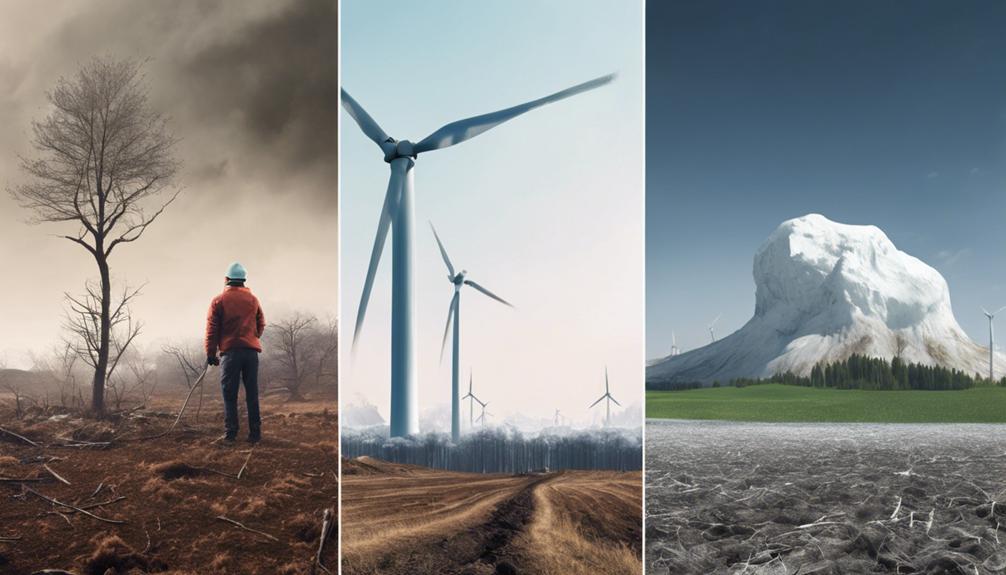
We're witnessing progress in the fight against climate change, with renewable energy success stories in Denmark and Costa Rica, and promising breakthroughs in carbon capture technology and sustainable land-use strategies. Electric vehicle adoption rates are on the rise, and climate-resilient infrastructure is being developed. However, we're also learning from past experiences, including ocean fertilization failures and the challenges of implementing effective carbon pricing initiatives. As we continue to explore the complexities of addressing climate change, we uncover more effective strategies and innovative solutions that hold great promise for our planet's future.
Renewable Energy Success Stories
As we shift our focus to renewable energy, it's heartening to see that several countries have made significant strides in harnessing the power of wind and solar energy. We're witnessing a global shift, with many nations setting ambitious targets to reduce their reliance on fossil fuels. In Denmark, for instance, wind power accounts for over 40% of the country's electricity production, making it a leader in the field. Similarly, Costa Rica has made tremendous progress, with renewable energy sources meeting nearly 100% of its electricity demands.
We're also seeing significant advancements in solar energy. Australia, for example, has seen a remarkable surge in rooftop solar installations, with over 20% of households now generating their own clean energy. In the United States, states like California and Texas are leading the way, with solar power becoming increasingly cost-competitive with fossil fuels. These successes are pivotal, as they demonstrate that a shift to renewable energy is not only necessary but also economically viable.
As we continue to explore innovative solutions to combat climate change, it's essential to acknowledge and learn from these success stories. By sharing knowledge and best practices, we can accelerate the global transformation to a low-carbon economy. We must continue to push the boundaries of what's possible, investing in research and development to drive down costs and increase efficiency. By working together, we can create a sustainable future powered by clean, renewable energy.
Carbon Capture Breakthroughs
As we shift our focus to carbon capture breakthroughs, we're excited to explore the innovative developments that are revolutionizing this space. We'll examine the cutting-edge tech that's making it possible to capture CO2 more efficiently, and how these advancements are paving the way for large-scale operations. By understanding what's working in carbon capture, we can better tackle the challenges that lie ahead.
New Tech Developments
We're witnessing a paradigm shift in carbon capture technology, with recent breakthroughs in direct air capture and afforestation enabling the removal of CO2 from the atmosphere at unprecedented scales. This progress has significant implications for our fight against climate change. For instance, companies like Climeworks and Carbon Engineering are pioneering direct air capture technologies that can absorb CO2 from the air, followed by utilization or storage. Meanwhile, afforestation efforts are gaining momentum, with innovative approaches like drone-based seeding and AI-powered forest monitoring. These advancements have the potential to offset significant amounts of emissions, buying us valuable time to shift towards a low-carbon economy. As we continue to develop and refine these technologies, we're optimistic about their potential to make a tangible impact on the climate crisis. We're excited to see how these innovations will shape the future of carbon capture and contribute to a more sustainable tomorrow.
Capturing CO2 Efficiently
Scientists are now harnessing the power of nanomaterials to create ultra-porous filters that can capture CO2 with unprecedented efficiency, paving the way for a new generation of carbon capture technologies. We're excited about the potential of these breakthroughs to greatly reduce greenhouse gas emissions. By using nanomaterials, researchers have been able to increase the surface area of these filters, allowing them to capture more CO2 molecules per unit of material. This means that less material is needed to capture the same amount of CO2, making the process more efficient and cost-effective. We've also seen advancements in membrane technology, which enables the efficient separation of CO2 from other gases. These developments are important in reducing emissions from industrial sources, such as power plants and cement factories, which are significant contributors to global CO2 emissions. As we continue to innovate, we're hopeful that these technologies will play an essential role in mitigating climate change.
Scaling Up Operations
We've reached a critical milestone in carbon capture technology, where large-scale implementation is now within reach, and we're poised to translate these breakthroughs into tangible emissions reductions. As we scale up operations, we're seeing significant gains in efficiency and cost-effectiveness. This is essential, as widespread adoption hinges on the ability to deploy carbon capture on a massive scale.
We're now witnessing the emergence of industrial-scale carbon capture facilities, capable of capturing millions of tons of CO2 annually. This is a game-changer, as it enables us to tackle emissions from heavy industries like cement, steel, and chemicals. Moreover, advancements in modular design and standardization are driving down costs, making large-scale deployment more feasible.
As we continue to push the boundaries of what's possible, we're seeing increased collaboration between industries, governments, and researchers. This convergence of expertise is yielding innovative solutions, such as integrating carbon capture with renewable energy sources. The potential for exponential growth is vast, and we're excited to see the tangible impact that these breakthroughs will have on our collective efforts to combat climate change.
Sustainable Land-Use Strategies
By adopting agroforestry practices, which integrate trees into agricultural landscapes, we can enhance ecosystem services while promoting more resilient and productive farming systems. This approach not only sequesters carbon but also increases biodiversity, reduces soil erosion, and supports rural livelihoods. Additionally, sustainable land-use strategies can help mitigate climate change by reducing deforestation and promoting sustainable forest management.
| Strategy | Benefits | Challenges |
|---|---|---|
| Agroforestry | Sequesters carbon, increases biodiversity, and supports rural livelihoods | Requires significant changes to farming practices and may require additional labor |
| Reforestation | Restores degraded lands, sequesters carbon, and supports biodiversity | Can be expensive and may require significant resources |
| Perennial Crops | Reduces soil erosion, increases water retention, and sequesters carbon | May require adjustments to farming equipment and practices |
| Conservation Agriculture | Reduces soil disturbance, increases soil health, and sequesters carbon | May require significant changes to farming practices and equipment |
As we move forward, it's essential to prioritize sustainable land-use strategies that not only address climate change but also support rural development and biodiversity conservation. By adopting these strategies, we can create a more resilient and sustainable food system that benefits both people and the planet.
Electric Vehicle Adoption Rates
As we shift our focus from sustainable land-use strategies to reducing emissions from transportation, we're seeing encouraging signs in electric vehicle adoption rates, with many countries experiencing a significant surge in EV sales over the past few years. In Norway, for instance, EVs accounted for over 50% of new car sales in 2020, while in the UK, EV sales increased by 144% in 2020 compared to the previous year. Similarly, in the US, EV sales have been growing steadily, with many states offering incentives to encourage adoption.
We're also seeing a significant drop in battery costs, making EVs more competitive with traditional internal combustion engine vehicles. This decrease in cost, combined with government incentives and investments in charging infrastructure, is driving growth in the EV market. Additionally, many major automakers are committing to electrify their fleets, with some pledging to go all-electric in the near future.
While there's still a long way to go to meet emissions reduction targets, the progress we're seeing in EV adoption rates is a promising step in the right direction. As we continue to drive innovation and investment in EV technology, we can expect to see even more widespread adoption and a significant reduction in emissions from transportation.
Climate-Resilient Infrastructure
As we turn our attention to climate-resilient infrastructure, we're focusing on the innovative solutions that are making a difference. We're looking at the impact of green building materials, flood-resistant construction, and adaptive urban design on our ability to withstand the challenges of a changing climate. By examining these key areas, we're hoping to identify what's working and what needs improvement.
Green Building Materials
We're seeing a surge in demand for green building materials that can withstand the challenges of climate change, and it's driving innovation in climate-resilient infrastructure. As we adapt to the new normal of intense weather events and rising temperatures, builders and architects are turning to sustainable materials that can mitigate the impacts of climate change.
| Material | Benefits |
|---|---|
| Recycled concrete | Reduces waste, lowers carbon footprint |
| Low-carbon cement | Decreases greenhouse gas emissions |
| Sustainable wood | FSC-certified, reduces deforestation |
| Insulating panels | Increases energy efficiency |
| Durable coatings | Resists extreme weather conditions |
These innovative materials not only reduce the environmental impact of construction but also enhance the resilience of buildings to climate-related disasters. By incorporating green building materials into our infrastructure, we can create more sustainable and resilient communities that can thrive in the face of climate change. As the demand for climate-resilient infrastructure continues to grow, we can expect to see even more innovative solutions emerge in the green building materials market.
Flood-Resistant Construction
We're fortifying our defenses against climate change by designing and building flood-resistant structures that can withstand the increasing frequency and severity of floods. This is essential, as rising sea levels, intense rainfall, and storm surges are putting our communities at risk. By incorporating flood-resistant construction into our infrastructure, we're reducing the likelihood of catastrophic damage and displacement. We're using innovative materials and technologies to create buildings that can withstand water inundation, high winds, and debris impact. For instance, we're using water-resistant materials, elevating structures, and designing flood-proof walls and doors. We're also implementing smart design elements, such as flood-resistant doors and windows, to prevent water entry. By integrating these features, we're creating resilient structures that can adapt to the changing climate. It's a critical step forward in protecting our communities and ensuring their long-term sustainability.
Adaptive Urban Design
One critical aspect of building resilience into our urban landscapes is designing adaptive urban infrastructure that can absorb the shocks of climate change. As we're witnessing more frequent and intense weather events, it's vital we rethink how we design our cities. Adaptive urban design is about creating climate-resilient infrastructure that can adapt to changing conditions, reducing the risk of damage and disruption.
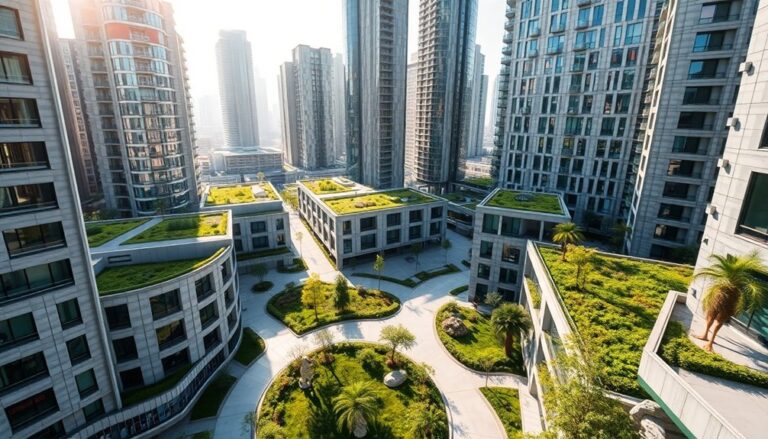
We’re seeing innovative approaches emerge, such as ‘sponge cities’ that absorb excess rainwater, and ‘floating’ buildings that rise with floodwaters. Green roofs, permeable pavements, and urban wetlands are also becoming more mainstream. These designs not only mitigate the impacts of climate change but also enhance our quality of life by providing green spaces, improving air quality, and reducing urban heat islands. Additionally, these innovations contribute to water scarcity solutions by capturing and reusing rainwater, reducing the strain on municipal water supplies. Cities are increasingly integrating smart irrigation systems and wastewater recycling to ensure sustainable water management. By combining climate resilience with resource efficiency, these strategies create more adaptable and livable urban environments.
As we move forward, it's essential we prioritize adaptive urban design in our urban planning strategies. By doing so, we can guarantee our cities remain livable, sustainable, and resilient in the face of a changing climate. We must work together to create urban landscapes that can adapt, recover, and thrive despite the challenges posed by climate change.
Ocean Fertilization Failures
How can a strategy that aims to mitigate climate change by stimulating phytoplankton growth in oceans have gone so wrong, with most ocean fertilization projects ending in failure? We thought we had a silver bullet – adding nutrients to the ocean to stimulate phytoplankton growth, which would absorb CO2 from the atmosphere. But it turns out that's not as simple as it sounds.
| Ocean Fertilization Projects | Outcome |
|---|---|
| IronEX | Inadequate CO2 sequestration |
| LOHAFEX | Unintended ecosystem disruption |
| EIFEX | Ineffective phytoplankton growth |
| SERIES | Lack of long-term data |
| SOFEX | Unsuccessful in mimicking natural processes |
We've invested millions in these projects, but the results are underwhelming. It's not just a matter of adding nutrients; the ocean's ecosystem is far more complex than we initially thought. Unintended consequences, such as disrupting the food chain or altering ocean chemistry, have been a recurring theme. Additionally, it's challenging to isolate the effects of fertilization from natural variability. As we explore further, it's clear that ocean fertilization is not the quick fix we hoped for. We must reevaluate our approach and consider alternative strategies that prioritize a more holistic understanding of the ocean's intricate balance.
Forest Restoration Efforts
As we acknowledge the limitations of ocean fertilization, our attention turns to the potential of forest restoration efforts, which have long been touted as a promising avenue for carbon sequestration. We've learned that forests are incredibly effective at absorbing carbon dioxide from the atmosphere, making them a vital tool in our fight against climate change. In fact, the IPCC estimates that forest restoration could remove up to 10 gigatons of CO2 equivalent from the atmosphere by 2050.
So, what's working in forest restoration efforts? For starters, we're seeing significant progress in countries like Brazil and Indonesia, where large-scale reforestation projects are underway. These efforts not only help to sequester carbon but also provide habitat for endangered species and support local communities. We're also seeing innovative approaches, such as the use of drones to plant trees and monitor forest health.
However, we're also facing challenges. Deforestation and land degradation continue to outpace restoration efforts, and funding for these initiatives remains insufficient. Additionally, we're realizing that simply planting trees isn't enough – we need to prioritize sustainable forest management and community engagement to guarantee the long-term success of these projects. Despite these challenges, we remain optimistic about the potential of forest restoration to make a meaningful impact on the climate crisis. By continuing to invest in and improve these efforts, we can harness the full potential of forests as a carbon sink.
Carbon Pricing Effectiveness
We're putting a price on pollution, and it's proving to be vital: carbon pricing initiatives have been implemented in over 50 countries, covering about 20% of global emissions. This approach is essential, as it provides a financial incentive for companies and individuals to reduce their carbon footprint. By setting a price on carbon emissions, governments can create a level playing field, where polluters pay for the damage they cause.
We've seen significant reductions in emissions where carbon pricing has been implemented effectively. For instance, the European Union's Emissions Trading System has led to a 21% decrease in emissions from participating countries. Similarly, British Columbia's carbon tax has resulted in a 5.5% decrease in emissions since its introduction in 2008.
What's working is that carbon pricing encourages innovation and investment in clean technologies. It also generates revenue that can be invested in renewable energy, energy efficiency, and other climate-friendly initiatives. However, what's not working is that the price of carbon is often too low to drive significant behavioral change. Additionally, some countries have exempted certain industries or provided loopholes, undermining the effectiveness of these initiatives.
We need to learn from these experiences and improve the design and implementation of carbon pricing initiatives. By doing so, we can create a more effective and equitable system that drives meaningful reductions in emissions and helps us combat climate change.
Frequently Asked Questions
Can Developed Countries Reduce Emissions Without Harming Their Economies?
We ask ourselves, can we in developed countries really reduce emissions without harming our economies? It's an important question. We think so. By investing in renewable energy, increasing energy efficiency, and implementing smart policies, we can reduce our carbon footprint without sacrificing growth. In fact, many companies are already profiting from sustainable practices. We just need to prioritize the shift and work together to make it happen.
Are Climate Change Initiatives Equally Effective in All Regions Globally?
When we examine climate change initiatives, we realize that their effectiveness varies greatly across regions. What works in one area may not work in another. We've seen successful projects in developed countries, but similar efforts falter in developing nations. It's clear that a one-size-fits-all approach won't suffice. We need to take into account regional differences, adapting strategies to each area's unique challenges and needs. By doing so, we can increase the initiatives' overall impact and create a more sustainable future.
How Do Climate Migrants Factor Into International Climate Agreements?
"A million tiny threads of displacement weave together to form the complex tapestry of climate migration. As we try to grasp the scope of this crisis, we're forced to confront the glaring omission of climate migrants in international climate agreements. It's like trying to hold water in our hands – we're struggling to contain the deluge of displaced people. We must acknowledge their plight and integrate their needs into global climate policies, ensuring a safer, more inclusive future for all."
Can Individual Actions Significantly Impact Climate Change Mitigation?
We often wonder if our individual actions can make a real difference in combating climate change. The truth is, every small step counts. We can reduce our carbon footprint by using public transport, carpooling, and reducing meat consumption. We can also switch to energy-efficient appliances and turn off lights when not in use. These habits may seem insignificant, but collectively, they can lead to significant positive change. By making conscious choices, we can contribute to a larger impact.
What Is the Ideal Balance Between Climate Change Mitigation and Adaptation Efforts?
As we tackle the complexities of climate change, we're faced with a pivotal dilemma: finding the ideal balance between mitigation and adaptation efforts. We believe it's essential to allocate resources effectively, striking a balance between reducing emissions and preparing for the inevitable impacts of climate change. We're working to identify the sweet spot where mitigation efforts slow down climate change, and adaptation strategies help us cope with the consequences.