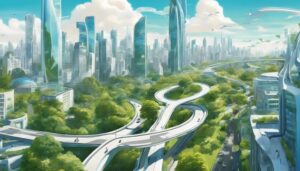
In addition to envisioning the future of public transportation, we're shifting gears towards a greener, more efficient era. Electric buses, like their diesel-free and quieter counterparts, are revolutionizing daily commutes. Hyperloop systems are poised to redefine long-distance travel, while autonomous vehicles promise safer roads and reduced congestion. Additionally, sustainable infrastructure and bike-friendly city designs prioritize both the environment and our well-being. Advanced public transit systems, like smart traffic management, optimize travel times and air quality. As we explore these cutting-edge innovations, we'll uncover a future that's not only eco-friendly but also seamless, efficient, and designed for a better tomorrow.
Electric Buses Take Center Stage
As we look to the future of public transportation, electric buses are increasingly taking center stage, promising a cleaner, quieter, and more efficient ride for commuters. We’re enthusiastic to see cities around the world making the switch to electric buses, and for good reason. These vehicles offer a significant reduction in greenhouse gas emissions, minimizing their carbon footprint and contributing less to air pollution. Plus, they’re much quieter than their diesel counterparts, making for a more pleasant commute. As technology advances and battery efficiency improves, the future of electric vehicles looks even more promising for public transit systems. Cities investing in electric bus infrastructure are not only enhancing sustainability but also reducing long-term operational costs. With continued innovation, the future of electric vehicles will play a pivotal role in shaping smarter and greener urban mobility.
We're also impressed by the improved efficiency of electric buses. With fewer moving parts, they require less maintenance, reducing downtime and keeping them on the road for longer. This means more reliable service for passengers and lower operating costs for cities. And let's not forget about the savings on fuel – electric buses can travel up to 250 miles on a single charge, depending on the model.
As cities continue to grow and urbanization increases, we need to rethink the way we move people around. Electric buses offer a viable solution, providing a comfortable, eco-friendly, and cost-effective way to transport large numbers of people. We're excited to see more cities adopting electric buses and making the shift towards a more sustainable future for public transportation.
Hyperloop Revolutionizes Long-Distance Travel
We're now turning our attention to the future of long-distance travel, where the hyperloop is poised to revolutionize the way we cover vast distances. Imagine traveling from Los Angeles to San Francisco in under 30 minutes, or from New York to Washington D.C. in just 30 minutes – that's the promise of the hyperloop. This innovative mode of transportation uses vacuum-sealed tubes and magnetic levitation to propel vehicles at remarkable speeds, reducing travel times and emissions.
The hyperloop's potential to transform long-distance travel is enormous. By reducing travel times, we can increase productivity, boost economic growth, and reconnect communities. Additionally, the hyperloop is an environmentally friendly option, producing far fewer emissions than traditional modes of transportation. With the ability to travel at speeds of up to 700 mph, the hyperloop can also reduce congestion on highways and at airports, making it a game-changer for commuters and travelers alike.
Several companies, including Virgin Hyperloop One and Hyperloop Transportation Technologies, are already working on developing the technology. While there are still challenges to overcome, the potential benefits of the hyperloop make it an exciting development in the future of public transportation. As we look to the future, it's clear that the hyperloop has the potential to revolutionize the way we travel, making it faster, cleaner, and more efficient.
Green Infrastructure for Urban Planning
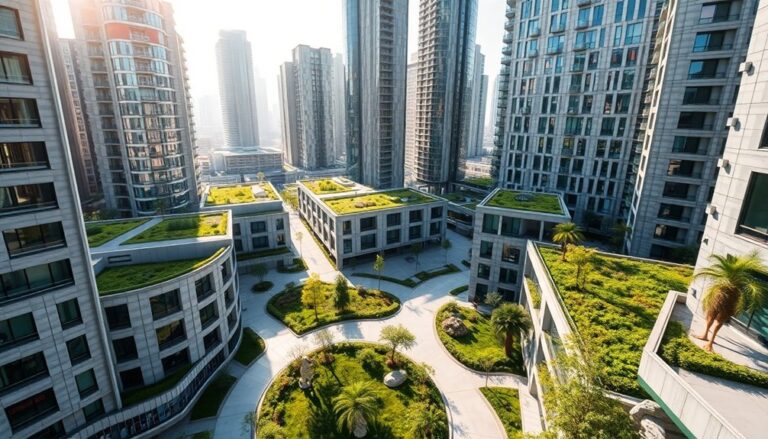
Cities are incorporating green infrastructure into their urban planning to safeguard against the effects of climate change and create more sustainable environments. We're seeing a shift towards designing cities that work in harmony with nature, rather than against it. This means incorporating green spaces, parks, and gardens into urban landscapes to reduce the urban heat island effect, manage stormwater runoff, and improve air quality.
We're also incorporating green roofs and walls into building design, which not only provide insulation and reduce energy consumption but also create habitats for wildlife. Additionally, urban planners are incorporating sustainable transportation systems, such as bike lanes and pedestrianized streets, to reduce reliance on personal vehicles and promote a healthier, more active lifestyle.
As we move forward, we'll see more emphasis on integrating green infrastructure into urban planning. This might include green corridors, which are linear parks that connect fragmented habitats and provide wildlife corridors. We'll also see more focus on adaptive reuse, where abandoned or underutilized spaces are repurposed as green spaces. By incorporating green infrastructure into urban planning, we can create cities that are not only more sustainable but also more livable, resilient, and beautiful. As we continue to urbanize, it's essential that we prioritize green infrastructure to secure a healthier, more sustainable future for generations to come.
Autonomous Vehicles for Safer Roads
As we explore the potential of autonomous vehicles, we're excited to discuss how they can lead to safer roads. We'll look at how self-driving cars can reduce the human error rate, which is a major contributor to accidents, and how they can be maintained more efficiently through enhanced scheduling. By leveraging these benefits, we can also improve emergency response times, ultimately saving lives.
Reduced Human Error Rate
By integrating autonomous vehicles into our public transportation systems, we can greatly reduce the human error rate, an essential step towards safer roads. Human error is a leading cause of accidents, and eliminating it can have a profound impact on road safety. With autonomous vehicles, we can minimize the risks associated with driver distraction, fatigue, and emotional decision-making. These vehicles are programmed to follow traffic rules, maintain a safe distance, and respond to unexpected events more accurately and quickly than human drivers.
Moreover, autonomous vehicles can detect potential hazards more effectively, thanks to their advanced sensors and cameras. They can also communicate with other vehicles and infrastructure to anticipate and avoid potential collisions. By decreasing the human error rate, we can create a safer and more reliable public transportation system. This, in turn, can increase public trust and confidence in our transportation systems, encouraging more people to use them. As we move towards a future of autonomous public transportation, we can look forward to a significant decrease in accidents and a substantial improvement in overall road safety.
Enhanced Vehicle Maintenance Scheduling
We can take another significant step towards safer roads by optimizing vehicle maintenance scheduling, which autonomous vehicles can facilitate through real-time monitoring and predictive analytics. This enables us to identify potential issues before they become major problems, reducing the likelihood of accidents caused by mechanical failures.
By leveraging advanced data analytics and machine learning algorithms, we can:
- Predictive maintenance: Identify potential issues before they occur, allowing us to schedule maintenance during downtime, minimizing disruptions to service.
- Real-time monitoring: Continuously track vehicle performance, enabling swift response to any anomalies or malfunctions.
- Data-driven insights: Analyze maintenance data to optimize maintenance schedules, reducing waste, and improving overall fleet efficiency.
Improved Emergency Response Time
In addition to autonomous vehicles, we can shave precious minutes off emergency response times, potentially saving lives and reducing the severity of injuries in the aftermath of accidents. In emergency situations, every second counts, and autonomous vehicles can provide critical support. By integrating with emergency services, autonomous vehicles can quickly dispatch rescue teams and provide real-time traffic updates, ensuring the fastest possible response. Additionally, autonomous vehicles can be equipped with advanced sensors and cameras, allowing them to detect accidents and alert emergency services instantly. This rapid response can make a significant difference in saving lives and reducing the severity of injuries. We can also program autonomous vehicles to provide critical care en route to the hospital, stabilizing patients and improving their chances of survival. By leveraging autonomous technology, we can create a safer, more efficient, and more responsive emergency response system that saves lives and reduces suffering.
Advanced Public Transit Systems
As we look to the future of public transportation, we're excited to explore the potential of advanced public transit systems. We'll examine how electric bus fleets can reduce emissions and operating costs, smart traffic management can optimize routes and schedules, and autonomous vehicle integration can enhance safety and efficiency. By exploring these innovations, we can create a more sustainable, efficient, and connected transportation network.
Electric Bus Fleets
Cities are turning to electric bus fleets as an essential component of advanced public transit systems, offering a cleaner, quieter alternative to traditional diesel-powered buses. As we work towards reducing our carbon footprint and create more sustainable transportation options, electric bus fleets are becoming an increasingly popular choice.
One of the key benefits of electric bus fleets is their environmental impact. Here are just a few ways they're making a difference:
- Zero Emissions: Electric buses produce no tailpipe emissions, reducing air pollution and greenhouse gas emissions in urban areas.
- Lower Operating Costs: Electric buses are notably cheaper to operate than traditional diesel buses, with reduced fuel and maintenance costs.
- Improved Rider Experience: Electric buses are quieter and provide a smoother ride, making for a more comfortable and enjoyable journey for passengers.
As we move forward, we can expect to see even more cities adopting electric bus fleets as a key part of their public transportation systems. With their many benefits, it's clear that electric buses are here to stay.
Smart Traffic Management
We're harnessing the power of advanced technology to optimize our traffic flow, and smart traffic management is revolutionizing the way we navigate our daily commutes. By leveraging real-time data and analytics, we're able to streamline traffic signals, reducing congestion and wait times. This intelligent system adjusts to changing traffic patterns in real-time, guaranteeing a smoother ride for commuters. We're also utilizing advanced sensors and cameras to monitor traffic conditions, detecting incidents and responding swiftly to minimize disruptions. This proactive approach enables us to reroute traffic, reducing the impact of accidents and road closures. Additionally, smart traffic management integrates with public transit systems, allowing for seamless coordination between buses, trains, and traffic signals. This harmonization ensures that public transportation runs efficiently, reducing travel times and encouraging more people to ditch their cars for a greener, more convenient option. As we continue to refine this technology, we're confident that smart traffic management will play a critical role in shaping the future of public transportation.
Autonomous Vehicle Integration
By integrating autonomous vehicles into our advanced public transit systems, we can greatly enhance the efficiency, safety, and accessibility of our transportation networks. Autonomous vehicles can optimize routes in real-time, reducing congestion and decreasing travel times. Additionally, they can improve safety by minimizing human error, which is responsible for a significant percentage of accidents.
Autonomous vehicles can also increase accessibility for the elderly and people with disabilities, providing them with greater independence and mobility. Here are three key benefits of autonomous vehicle integration:
- Improved Safety: Autonomous vehicles can detect and respond to hazards more quickly than human drivers, reducing the risk of accidents.
- Enhanced Efficiency: Autonomous vehicles can optimize routes and traffic flow, reducing congestion and decreasing travel times.
- Increased Accessibility: Autonomous vehicles can provide greater mobility and independence for the elderly and people with disabilities.
Sustainable Bike-Friendly City Design
As we prioritize bike-friendly infrastructure in our reimagined urban landscapes, incorporating bike-friendly infrastructure becomes essential to reducing carbon footprints and fostering healthier, more sustainable communities. By emphasizing bikeability, we can create cities that not only reduce air pollution but also promote physical activity and social interaction.
We envision streets designed with cyclists in mind, featuring dedicated bike lanes, secure parking facilities, and smart traffic signals that prioritize cyclist safety. Green spaces and pedestrianized zones can also be integrated, allowing citizens to breathe easier and enjoy the urban environment.
In bike-friendly cities, we'd see a shift away from car-centric design, towards more inclusive, human-scale urban planning. This means narrower traffic lanes, slower speed limits, and ample bike-share systems. With fewer cars on the road, we'd reduce congestion, noise pollution, and greenhouse gas emissions.
Moreover, bike-friendly infrastructure can boost local economies, as cycling tourists and locals alike explore neighborhoods on two wheels. By repurposing underutilized spaces, we can create vibrant public areas that foster community engagement and social connection.
As we work towards sustainable, people-centric cities, we recognize the vital role bike-friendly design plays in shaping a healthier, more environmentally conscious future. By rethinking our urban landscapes, we can create a better world – one bike lane at a time.
Smart Traffic Management Systems
Through advanced data analytics and real-time monitoring, smart traffic management systems can dynamically adjust traffic signal timings to optimize traffic flow and greatly reduce congestion. This means we can say goodbye to frustrating traffic jams and hello to a smoother, more efficient commute.
We've all been there – stuck in traffic, watching the minutes tick by, wondering why the lights always seem to be against us. But with smart traffic management systems, those days are behind us. By leveraging real-time data, these systems can adjust signal timings on the fly to optimize traffic flow. This not only reduces congestion but also decreases air pollution and lowers travel times.
Here are just a few ways smart traffic management systems can benefit our daily commutes:
- Reduced congestion: By dynamically adjusting signal timings, smart traffic management systems can reduce congestion by up to 25%.
- Decreased travel times: With optimized traffic flow, we can get where we need to go faster, reducing travel times by up to 15%.
- Improved air quality: By reducing congestion and promoting smoother traffic flow, smart traffic management systems can decrease air pollution by up to 10%.
Frequently Asked Questions
How Will Green Transportation Affect Low-Income Communities?
We're concerned about how green transportation will impact low-income communities. Will they have access to affordable, eco-friendly options or be left behind? We worry that green initiatives might displace long-established communities or make transportation costs prohibitive. We need to ensure that sustainable transportation solutions are inclusive and equitable, providing benefits for all, not just the privileged few.
Can Electric Buses Operate in Extreme Weather Conditions?
A million questions swirl in our minds, but let's tackle the big one: can electric buses operate in extreme weather conditions? We're talking subzero temps and blistering heatwaves. The answer is a resounding yes! Electric buses are designed to perform at their best in various climates. Advanced battery management systems and clever engineering guarantee they can handle extreme temperatures, keeping us moving safely and efficiently. We can breathe a collective sigh of relief – our green transportation future is looking bright!
Will Hyperloop Technology Be Accessible to Rural Areas?
We're wondering if hyperloop technology will reach rural areas. Honestly, it's a challenge. Hyperloops require extensive infrastructure, which can be costly and logistically difficult to implement in remote areas. While it's not impossible, we think it'll take significant investment and planning to make it happen. That being said, if anyone can make it work, it's the innovative minds behind hyperloop tech. We're hopeful, but it's definitely a complex issue.
How Will Autonomous Vehicles Handle Pedestrian-Only Zones?
As we imagine a future with autonomous vehicles, we wonder how they'll navigate pedestrian-only zones. We envision these vehicles being programmed to detect and respond to pedestrian traffic signals, slowing or stopping as needed. They'll use sensors and cameras to detect pedestrians, even in areas without clear signage. We're confident that with advanced tech, autonomous vehicles will prioritize pedestrian safety in these zones.
Can Smart Traffic Management Systems Prioritize Emergency Vehicles?
We're wondering if smart traffic management systems can prioritize emergency vehicles. The answer is yes! With real-time data and advanced algorithms, these systems can detect emergency vehicles and adjust traffic signals to give them a clear path. We can imagine it: ambulances and fire trucks zooming through green lights, saving precious minutes in life-or-death situations. It's a game-changer for emergency responders and the people they're rushing to help.